Issues related to the preservation of Azerbaijan’s historical and cultural heritage and its sustainable development through tourism were presented at an international academic conference held in Plovdiv, Bulgaria.
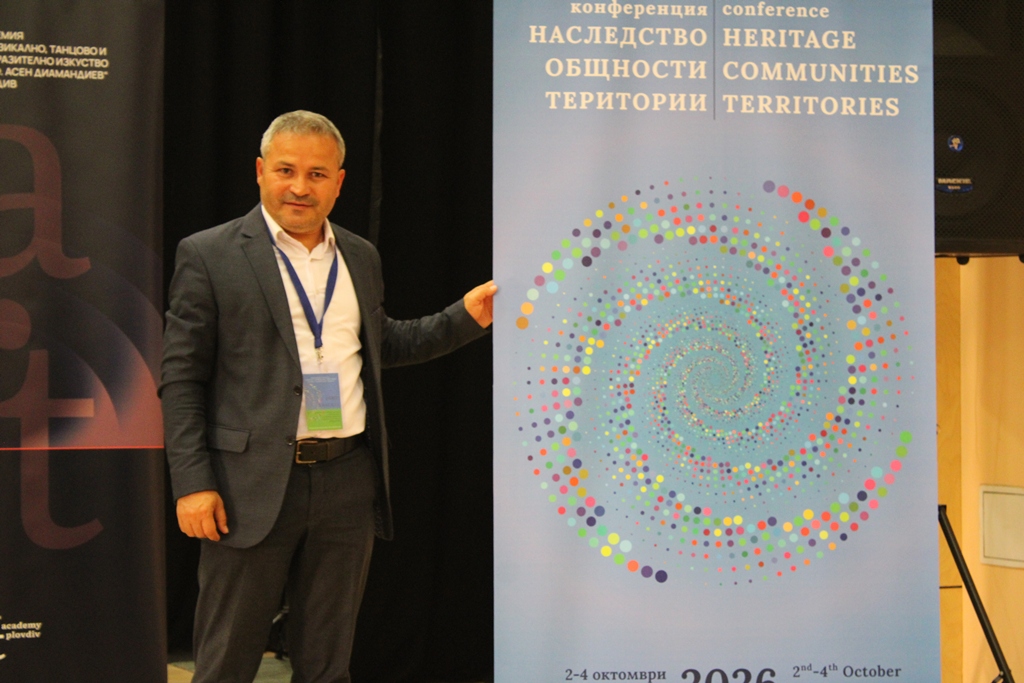
From 2 to 4 October 2026, scholars and researchers from various countries gathered in Plovdiv for the international academic conference “Heritage, Communities, Territories.” The conference featured research on cultural heritage, religious and ethnic communities, migration, collective memory, tourism, gender, musical culture, and social institutions of the Ottoman period.
Azerbaijan was represented at the conference by historian and archaeologist Fariz Khalilli. His paper, “From Cultural Tourism to Cultural Heritage Tourism: The Case of Basqal Historical and Cultural Reserve, Azerbaijan,” focused on the preservation and presentation of Basqal’s tangible and intangible cultural heritage through contemporary approaches to tourism.
The presentation offered a comparative analysis of the evolution of approaches reflected in ICOMOS cultural tourism documents adopted in 1976, 1999, and 2022. It emphasised that contemporary cultural heritage tourism goes beyond visiting historical monuments. Community participation, the safeguarding of living heritage, interpretation, visitor and carrying-capacity management, monitoring, resilience, and consideration of climate-related factors are among the key components of the contemporary approach.
From this perspective, Basqal was presented as a living heritage place. Particular attention was given to the importance of safeguarding the settlement’s traditional houses, craft environment, silk production and kelaghayi tradition, religious and public buildings, water system, epigraphic and archaeological heritage, family memory, and everyday cultural practices as interconnected elements of a single heritage environment. The activities of the NUGAY Intangible Cultural Heritage Tourism Centre were presented as a practical model combining the interpretation of local cultural heritage with craftsmanship, hospitality, and community participation.
Other presentations at the conference paid particular attention to the history and contemporary situation of religious and ethnic communities in different parts of the Balkans and Europe. Mila Maeva examined Adventist communities, while Emine İnanır discussed the cultural self-preservation practices of the Old Believer Cossacks in Türkiye. Irena Yancheva focused on little-known Bulgarian communities associated with Prizren and Prishtina, and Polina Trifonova explored concepts of “home” and “homeland” among the Crimean Tatars in Bulgaria.
Nergis İmamoğlu examined the Bulgaria–Türkiye border through the lived experiences of migrants, while Stoyan Nikov analysed resource distribution, social relations, and cultural intimacy in polyethnic settings. Milena Angelova’s presentation addressed the identity, religious heritage, and public visibility of the Yezidi community in Armenia.
Emmi Kujanpää of the University of Helsinki presented research on folk-music collaboration between Finland and Bulgaria from the perspective of gender equality. Her research addressed women’s positions as performers, composers, and creative decision-makers in folk music, as well as transnational cultural cooperation and support for young people’s creative work.
Presentations dealing with Ottoman heritage also attracted particular interest. Dr Sezer Nehat examined the transformation of waqf culture in Silistra between the sixteenth and nineteenth centuries, tracing developments from large land- and property-based waqfs to the widespread use of cash waqfs. The presentation demonstrated the economic connections between agricultural production, trade, urban infrastructure, and waqf institutions in the Danube region.
Kamal Rashid, meanwhile, examined the historic Kurshum Mosque in Karlovo through the concept of “difficult heritage,” addressing the relationship between historical authenticity, collective memory, and contemporary identity narratives.
The research presented at the conference demonstrated that the safeguarding of cultural heritage cannot be limited to the preservation of physical remains inherited from the past. Heritage acquires sustainable meaning when it is considered together with living communities, their memories, religious and social practices, traditional knowledge, and contemporary needs.
The presentation of the Basqal case study in an international academic environment contributed to promoting Azerbaijan’s rich tangible and intangible cultural heritage through contemporary international heritage approaches. It also provided an opportunity to compare Azerbaijan’s experience with practices and research from the Balkans and other parts of Europe.
|


 Twitter
 Google
 Myspace


